3D Tear Bear Girl
Crafting enthusiasts often seek projects that offer a blend of tactile satisfaction and visual impact. The 3D Tear Bear Girl pattern represents a unique intersection of digital convenience and traditional paper crafting techniques. This specific design allows creators to produce dimensional bear figures with a distinct, fuzzy texture achieved through the intentional tearing of mulberry paper. Unlike standard die-cut designs that rely solely on clean edges, this project emphasizes texture and depth, making it particularly appealing for scrapbookers, card makers, and mixed-media artists looking to add a sophisticated, handcrafted element to their layouts.
Understanding what the 3D Tear Bear Girl entails requires looking beyond just the final image. It is a digital download package designed for immediate use, containing vector and raster files compatible with a wide array of cutting machines and design software. However, the true character of the project emerges during the assembly phase, where the choice of materials—specifically torn mulberry paper—plays a critical role in the aesthetic outcome. This article explores the practical aspects of using this pattern, evaluating its benefits, technical requirements, and suitability for various crafting goals.
What Is the 3D Tear Bear Girl?
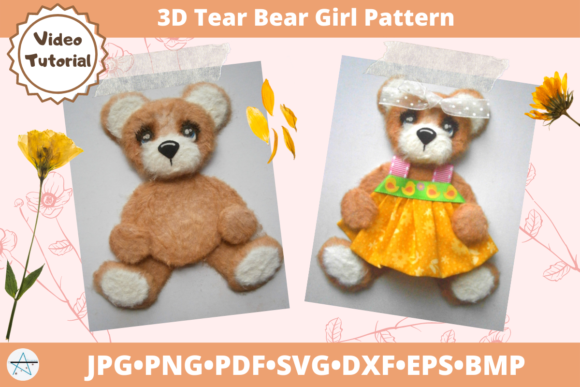
The 3D Tear Bear Girl is not merely a flat illustration but a structured template intended for three-dimensional construction. The core concept revolves around creating a bear figure that appears soft and textured. This effect is primarily driven by the recommendation to trace the pattern onto mulberry paper and then tear the pieces rather than cutting them cleanly. Mulberry paper is known for its fibrous, irregular edges and subtle translucency. When torn, these fibers create a natural "fuzzy" border that mimics fur, adding a layer of realism and warmth that precise machine cuts cannot replicate.
The digital component of this product is comprehensive. It provides the foundational shapes needed to construct the bear, including limbs, torso, head, and facial features. These patterns are provided in multiple formats, ensuring that users with different technological setups can access the necessary tools. Whether one prefers working within Cricut Design Space, Silhouette Studio, or Adobe Illustrator, the included file types support seamless integration into existing workflows.
Technical Specifications and File Compatibility
A significant advantage of the instant digital download format is the versatility of the included files. The ZIP package contains patterns in JPG, PNG, PDF, SVG, DXF, EPS, and BMP formats. This breadth of compatibility ensures that the pattern is accessible regardless of the user’s preferred cutting machine or design software.
- Vector Formats (SVG, DXF, EPS): These are ideal for use with electronic cutting machines such as Cricut, Silhouette, Scan-N-Cut, and Sizzix. Vector files allow for infinite scaling without loss of quality. Users can resize the template to fit specific layout dimensions, provided they scale all pieces equally to maintain proportionate measurements.
- Raster Formats (JPG, PNG, BMP): These are suitable for printing and manual cutting or for tracing onto paper before using a machine. They are also useful for reference images when assembling the 3D structure.
- PDF Files: These serve as excellent printable guides for hand-cutting or for use in programs like Adobe Photoshop and Sure Cuts a Lot.
While the file variety is extensive, users must verify compatibility with their specific machine software. Some older versions of cutting software may require conversion of certain vector formats. Additionally, when resizing vector files, it is crucial to ensure that the entire group is scaled uniformly to prevent distortion of the bear’s proportions.
Material Considerations: The Role of Mulberry Paper
The defining characteristic of the 3D Tear Bear Girl is the material interaction. While the pattern itself is digital, the physical result depends heavily on the medium used. The instructions specifically highlight the use of mulberry paper for tracing and tearing. This step is optional if one prefers a cleaner, more geometric look, but it is integral to achieving the intended "tear bear" aesthetic.
Mulberry paper varies in thickness and fiber density. Thinner papers may tear too easily, resulting in fragile pieces, while thicker papers might resist tearing, leading to jagged, uneven edges. Experimentation is recommended. For those who do not wish to use mulberry paper, alternative textured papers or even fabric scraps can be substituted, though the resulting texture will differ significantly. The ability to add fabric clothing, buttons, and titles further expands the customization potential, allowing the basic bear shape to be transformed into a personalized character.
Benefits and Practical Applications
The primary benefit of this pattern is its adaptability. It serves two main purposes in the crafting world:
- Scrapbooking Enhancements: The 3D nature of the bear adds depth to flat pages. When adhered to a layout, it creates shadows and layers that draw the eye. The fuzzy texture contrasts nicely with glossy photos or smooth cardstock backgrounds.
- Card Making: For greeting cards, the bear can be attached as an embellishment or used as the central focal point. The option to add clothing and accessories makes it suitable for various occasions, from birthdays to holidays.
Another key benefit is the inclusion of interactive supply lists. The package includes two PDFs that link directly to video tutorials and supply sources. This reduces the research time for beginners who may be unsure which adhesives, papers, or tools work best. The clickable links allow for direct ordering of supplies, streamlining the preparation process.
Tradeoffs and Challenges
Despite its advantages, there are tradeoffs to consider. The requirement to tear paper manually introduces a variable element of unpredictability. Achieving consistent tears across multiple layers can be challenging, especially for beginners. If precision is the primary goal, this method may feel frustrating compared to clean-cut vector designs.
Additionally, the 3D assembly process requires patience. Constructing a multi-layered paper figure involves careful gluing and positioning to ensure stability. If the paper is too thin, the bear may lack structural integrity; if too thick, it may become bulky and difficult to adhere to flat surfaces. Users should also consider the time investment. While the digital download is instant, the physical crafting process, particularly the tearing and assembly, is more labor-intensive than simple die-cutting.
Who Is This Pattern For?
The 3D Tear Bear Girl is best suited for crafters who value texture and handmade aesthetics over speed and uniformity. It is an excellent choice for:
- Scrapbookers: Who want to add dimension and tactile interest to memory-keeping pages.
- Card Makers: Looking for unique, non-generic embellishments.
- Digital Cutter Owners: Who appreciate having flexible file formats for both machine cutting and manual tracing.
- Beginners Willing to Learn: The included video tutorials provide guidance on technique, making it a viable learning tool for mastering paper tearing and 3D assembly.
Conversely, those seeking quick, mass-produced results or those uncomfortable with manual paper manipulation may find this pattern less appealing. Alternatives such as pre-made die-cuts or simple 2D stencils might better suit users prioritizing efficiency over artistic nuance.
Conclusion
The 3D Tear Bear Girl pattern offers a compelling option for crafters interested in blending digital precision with analog texture. Its comprehensive file support and detailed supply guides make it accessible to a wide range of skill levels. By embracing the imperfections of torn mulberry paper, users can create charming, textured bears that stand out in scrapbooks and cards. While it demands more time and attention to detail than standard cutouts, the resulting aesthetic reward—a soft, fuzzy, and deeply personal crafted object—makes it a worthwhile endeavor for those willing to engage with the process.