Icon Space 3D Plane
In the modern digital landscape, where visual communication is paramount, the efficiency of your asset management and design workflow can make or break a project. Whether you are a freelancer managing multiple client deliverables, a small business owner launching a new brand identity, or an educator creating engaging course materials, the tools you use must be versatile, compatible, and easy to implement. This is where Icon Space 3D Plane enters the equation not just as a single graphic, but as a comprehensive solution for integrating high-quality 3D-style iconography into various professional workflows.
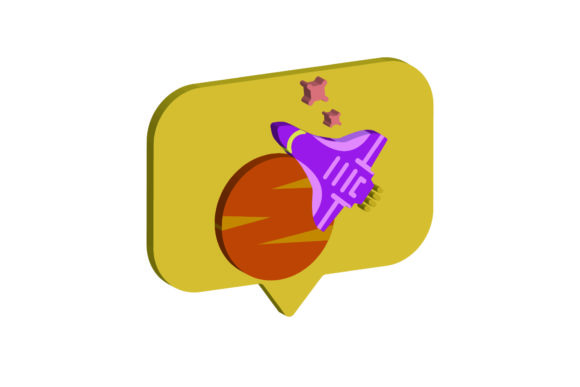
The concept of a "3D plane" in digital design often refers to a flat surface rendered with depth, shadows, and lighting effects to create a sense of three-dimensionality without the computational overhead of full 3D modeling software. Icon Space 3D Plane leverages this aesthetic to provide clean, modern, and visually appealing assets that stand out in both digital and print media. However, the true value of this resource lies not only in its visual appeal but in the structured delivery system it offers, designed specifically to streamline the creative process from conception to final output.
Understanding the Deliverable: What You Actually Get
One of the most common friction points in creative projects is file compatibility. Designers often find themselves stuck because a purchased asset is only available in a format that their specific software cannot edit, or worse, a rasterized image that loses quality when scaled. The Icon Space 3D Plane package addresses this by providing a robust set of six distinct digital files. This variety ensures that regardless of your preferred toolchain—whether it’s Adobe Illustrator, CorelDRAW, Cricut Design Space, or a simple web editor—you have the right asset at hand.
The package includes:
- 1 AI File: Native Adobe Illustrator format. This is the gold standard for vector editing, allowing professionals to manipulate paths, colors, and gradients with precision. It serves as the master source file for complex designs.
- 1 EPS File: Encapsulated PostScript format. Essential for compatibility with older design software and many desktop publishing applications, ensuring your design remains editable across different platforms.
- 1 SVG File: Scalable Vector Graphics. The go-to format for web design and responsive interfaces. SVGs remain crisp at any screen size and can be easily animated or styled with CSS.
- 1 DXF File: Drawing Exchange Format. Crucial for makers, hobbyists, and small manufacturers using laser cutters or vinyl plotters (like Cricut or Silhouette). This format translates the design into cut lines, bridging the gap between digital design and physical production.
- 1 JPG File: Joint Photographic Experts Group. A universally recognized raster format suitable for quick previews, email attachments, or direct insertion into presentations where vector editing is not required.
- 1 PNG File: Portable Network Graphics. Ideal for web use with transparency support, allowing the 3D plane icon to overlay seamlessly on various backgrounds without a bounding box.
This multi-format approach eliminates the need for third-party conversion tools, which can introduce errors or degrade quality. By receiving these files directly, you maintain control over the integrity of your design throughout the entire lifecycle of a project.
Integration into Professional Workflows
How does Icon Space 3D Plane fit into your daily operations? The answer depends on your role, but the underlying principle is consistency and adaptability. For graphic designers and marketers, the inclusion of both AI and EPS files means the asset can be integrated into larger brand systems. You can extract specific color palettes from the 3D shading to match corporate branding guidelines, ensuring a cohesive look across marketing materials, social media posts, and website headers.
For educators and content creators, the SVG and PNG formats are particularly valuable. When designing online courses or blog posts, visual aids help retain student attention. The 3D effect adds a layer of professionalism that flat icons sometimes lack, making complex concepts easier to digest. Because the SVG is scalable, the same icon can be used in a thumbnail image or a full-page diagram without pixelation, saving time on resizing tasks.
Entrepreneurs and small business owners who produce physical products will find the DXF file indispensable. If you are creating custom merchandise, such as engraved wooden signs, cut vinyl decals, or laser-etched acrylic displays, the DXF file provides the exact vector paths needed for manufacturing. This reduces the learning curve associated with preparing digital files for production, allowing you to move from idea to product faster.
Technical Considerations for Seamless Implementation
To get the most out of Icon Space 3D Plane, it is important to understand how to handle these files correctly. While the formats are diverse, they share a common requirement: proper organization. Before opening any of the files, ensure your working directory is structured. Create separate folders for "Source Files," "Web Assets," and "Print/Production." This habit prevents version confusion and ensures that if you need to revisit a project months later, you know exactly where the editable master lies.
When working with the AI or EPS files, pay attention to the layer structure. High-quality vector assets usually have grouped layers for shadows, highlights, and base shapes. Keeping these layers intact allows for future customization. For instance, if you need to change the color scheme of the 3D plane to match a seasonal promotion, having separate layers makes this a matter of seconds rather than hours of redrawing.
For those using the DXF file for cutting machines, always perform a test run on scrap material first. Check the scale settings in your cutting software to ensure the output matches your intended physical dimensions. The 1920px x 1280px canvas size mentioned in the specifications provides a generous resolution for detailed cuts, but verifying the aspect ratio and scaling factors in your specific machine’s software is a critical step in quality control.
Long-Term Value and Versatility
The longevity of a digital asset is determined by its flexibility. Icon Space 3D Plane is designed with scalability in mind. Because the core files are vectors, you are not locked into a single size or application. A logo element created today can be expanded for a billboard next year without loss of fidelity. This forward-thinking approach aligns with best practices in sustainable design, where resources are reused and adapted rather than discarded.
Furthermore, the combination of raster (JPG/PNG) and vector (AI/EPS/SVG/DXF) formats covers almost every potential use case. You might use the PNG for a quick social media story, the SVG for a website footer, and the DXF for a limited-edition print run. Having all six files in one package simplifies license management and asset tracking, reducing administrative overhead for busy professionals.
In conclusion, Icon Space 3D Plane is more than just a decorative element; it is a functional component of a streamlined design ecosystem. By providing a comprehensive suite of editable formats, it empowers users to maintain consistency, reduce technical bottlenecks, and focus on creativity rather than file conversion. Whether you are planning a major rebrand, executing a detailed craft project, or simply enhancing your digital presence, this resource offers the practical foundation needed to execute your vision efficiently and effectively.