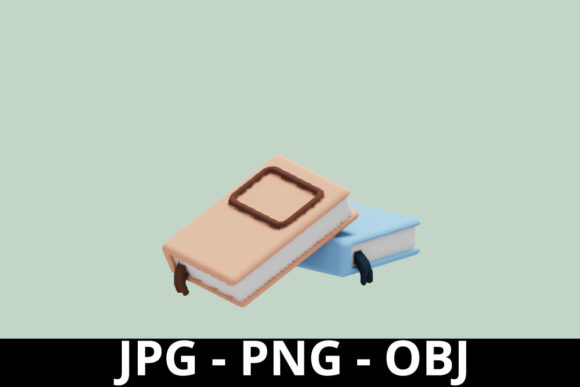
3D Rendering Stack of Books
In the digital age, visual communication is paramount. Whether you are designing a course landing page, creating marketing materials for an educational platform, or simply looking to add a touch of academic sophistication to a presentation, the imagery you choose sets the tone. One of the most versatile and enduring visual motifs in this space is the 3d rendering stack of books. It is more than just a collection of objects; it is a symbol of knowledge, structure, and learning.
This specific asset type offers a unique blend of realism and artistic control. By providing formats like JPG, PNG, OBJ, and ZIP folders containing high-resolution renders, creators can integrate these elements seamlessly into their workflows. The ability to isolate these objects against clean backgrounds allows for endless customization, making them ideal for designers who need precise control over composition without the mess of physical photography.
Why Choose 3D Renders Over Traditional Photography?
The decision to use a 3D rendered stack of books often comes down to consistency and flexibility. In traditional stock photography, finding the perfect angle, lighting, and book arrangement can be time-consuming. You might find a great image of textbooks, but the lighting might not match your brand’s aesthetic, or the background might be too cluttered for your needs.
With a 3D render, you get:
- Pure Isolation: Most of these assets come with transparent PNGs or isolated JPGs, allowing you to drop the stack directly onto any background—be it a gradient, a solid color, or a complex scene.
- Customizable Details: If you have access to the OBJ files, you can tweak the textures, adjust the "hardcover" finishes, or even modify the spine colors to match your brand palette perfectly.
- Perfect Lighting: Digital lighting ensures that shadows and highlights are consistent across all your materials, from web banners to print brochures.
- No Physical Logistics: There is no need to source props, set up a studio, or worry about damage during shipping. The asset is ready to use immediately.
Creative Applications for Educators and Marketers
The versatility of a stacked book arrangement makes it suitable for a wide range of industries. Here is how different professionals can leverage this visual element.
Educational Institutions and Online Courses
For universities, online academies, and corporate training departments, the concept of study and learn is central. A 3D illustration of a textbook stack serves as an immediate visual cue for expertise and curriculum depth. Imagine a landing page for a new data science course. Placing a sleek, modern stack of blue and white hardcovers next to the headline creates a subconscious association with rigorous academic standards.
You can use these renders to:
- Create Module Icons: Use closeup shots of individual books from the stack to represent different topics within a course.
- Design Social Media Graphics: A tilted stack of books with a laptop nearby suggests "blended learning," appealing to students who value both traditional knowledge and digital convenience.
- Enhance Email Newsletters: A simple, isolated book stack can serve as a divider or header image, breaking up text and adding visual interest without distracting from the content.
Marketing and Advertising
Marketers often struggle with creating original visuals that don’t look generic. Using a high-quality 3D render helps avoid the cliché of a poorly lit photo of random books on a desk. Instead, you can curate a specific narrative. For example, a publisher launching a new series of business novels might use a stack of gold-accented hardcovers to convey prestige and success.
The blue tones often associated with these renders evoke trust, intelligence, and calmness—key emotions for financial services or tech education. By manipulating the angle and the surrounding negative space, you can create dynamic compositions that guide the viewer’s eye toward your call-to-action button.
Content Creation and Blogging
Bloggers and freelancers need fresh imagery to keep their posts engaging. A static wall of text can be daunting. Inserting a 3D render of a literature stack provides a natural break in the reading flow. It signals to the reader that the upcoming section might involve research, references, or deep-dive information.
Furthermore, because these assets are often available in vector-friendly or high-res raster formats, they scale well. You can use a small icon version in a sidebar and a large, detailed version in the main body of the article, maintaining visual hierarchy and professional polish.
Technical Considerations for Best Results
To get the most out of your 3d rendering stack of books, understanding the file formats is crucial. The ZIP folder typically contains a mix of outputs, each serving a different purpose in the design process.
Leveraging PNG and JPG Formats
The JPG and PNG files are your workhorses. PNGs with transparency are essential for compositing. When placing a book stack onto a busy background, ensure the resolution is high enough (at least 300 DPI if printing, or 72-150 PPI for screen) to maintain sharp edges. Pay attention to the shadows in the render. A good 3D render includes soft, realistic drop shadows that ground the object. If the shadow looks artificial, the entire composition will feel flat.
Exploring OBJ Files for Advanced Users
If you are a designer using software like Blender, Cinema 4D, or Maya, the OBJ files offer unparalleled freedom. You can re-light the scene to match your project’s ambient light. You can swap out the book covers to feature your own typography or logos. This level of customization turns a generic stock asset into a proprietary brand element.
However, working with 3D models requires technical skill. Ensure your rendering engine supports the geometry of the provided OBJ files. Sometimes, complex bindings or page textures can be heavy; consider simplifying the geometry if you are rendering at scale for web performance.
Avoiding Common Pitfalls
While 3D renders are powerful, they can sometimes look too perfect or sterile. To keep your designs grounded and relatable:
- Add Imperfections: Real books have worn corners, slight dust, or fingerprints. If the render is too pristine, consider adding subtle texture overlays in post-production to give it character.
- Contextualize the Scene: Don’t just leave the books floating in void unless it’s a minimalist design choice. Place them on a wooden desk, next to a coffee cup, or under a warm lamp. These contextual clues make the image feel lived-in and authentic.
- Balance the Composition: A tall, unstable stack might suggest chaos, while a neat, symmetrical pile suggests order. Choose the arrangement that matches the message you want to convey. For a lecture on innovation, a slightly askew stack might be more appropriate than a rigid tower.
Conclusion: Building a Visual Library
Incorporating a 3d rendering stack of books into your design toolkit is a strategic move for anyone involved in education, publishing, or knowledge-based services. It bridges the gap between traditional academic symbolism and modern digital aesthetics. By utilizing the various formats available in your asset pack, you can create cohesive, professional, and inspiring visuals that resonate with your audience.
Whether you are a teacher preparing slides for your next lecture, a marketer launching a new course, or a blogger writing about knowledge, these renders provide a reliable foundation. They allow you to focus on your message while ensuring the visual support is strong, clear, and professionally executed. Start experimenting with angles, colors, and contexts today to elevate your creative output.