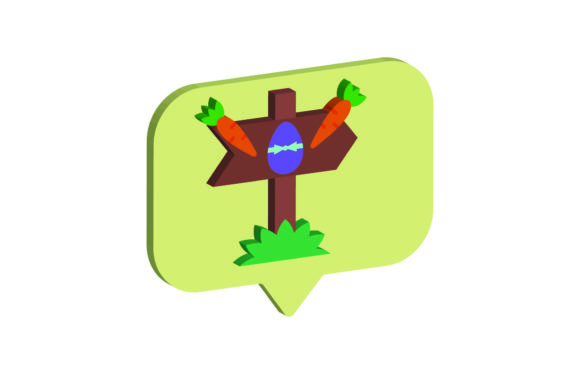
3D Easter Icon Cross
In the realm of digital design and seasonal marketing, visual assets must balance aesthetic appeal with technical versatility. The 3D Easter Icon Cross emerges as a specialized resource designed to meet these dual demands. For professionals ranging from graphic designers and small business owners to educators and content creators, having access to high-quality, editable vector graphics is not merely a convenience—it is a workflow necessity. This asset provides a distinct intersection of thematic relevance and functional utility, offering a polished 3D-rendered cross icon that can be integrated into various commercial and personal projects.
The core value of this digital product lies in its comprehensive file package. Rather than providing a single static image, the package delivers six distinct file formats, ensuring compatibility across a wide spectrum of design software and output requirements. This multi-format approach addresses the common pain points designers face when sourcing assets: compatibility issues, scalability limitations, and editing restrictions. By receiving the design in AI, EPS, SVG, DXF, JPG, and PNG formats, users gain the flexibility to adapt the icon for everything from high-resolution print materials to web-based graphics and laser-cut physical crafts.
Technical Specifications and File Integrity
Understanding the technical backbone of the 3D Easter Icon Cross is essential for evaluating its practical application. Each file is generated on a standard canvas size of 1920px by 1280px. This resolution strikes a balance between sufficient detail for close-up viewing and manageable file sizes for efficient processing. While 1920x1280 is often associated with HD display standards, in the context of vector files like AI, EPS, and SVG, it serves as a scalable coordinate system rather than a hard pixel limit. This means the icon can be scaled up or down without losing quality, a critical feature for responsive web design and large-format printing.
- AI (Adobe Illustrator): As the native format for Adobe’s vector ecosystem, the AI file allows for deep editing of layers, colors, gradients, and shapes. It is ideal for designers who need to customize the icon to match specific brand guidelines or integrate it into complex compositions.
- EPS (Encapsulated PostScript): A widely supported vector format that ensures compatibility across various design applications beyond Adobe’s suite. The EPS file preserves the vector nature of the artwork, making it suitable for professional printing workflows where rasterization might introduce artifacts.
- SVG (Scalable Vector Graphics): Essential for web development and modern UI/UX design. The SVG file enables crisp rendering on all screen densities and allows for CSS manipulation, animation, and accessibility features. It is the go-to choice for websites, apps, and digital presentations.
- DXF (Drawing Exchange Format): Often overlooked in general graphic design but crucial for crafters and makers. The DXF file is optimized for cutting machines such as Cricut and Silhouette. This makes the 3D Easter Icon Cross particularly valuable for entrepreneurs producing physical merchandise, such as wooden signs, vinyl decals, or paper crafts.
- JPG (Joint Photographic Experts Group): A rasterized version of the design, useful for quick previews, social media posts, or platforms that do not support vector uploads. It offers broad compatibility but lacks the editability of vector formats.
- PNG (Portable Network Graphics): Similar to JPG but supports transparency. This is vital for overlaying the icon onto different backgrounds without unwanted white boxes, ensuring seamless integration into designs.
Design Aesthetics and Visual Impact
The term "3D" in the title suggests depth, dimensionality, and realism. Unlike flat, minimalist icons that rely on simple geometric shapes, a 3D-rendered cross leverages lighting, shadows, and texture to create a sense of volume. This stylistic choice can significantly enhance the perceived value of a design project. In religious or spiritual contexts, the added depth can evoke a sense of reverence and solidity. In secular or festive contexts, it adds a touch of sophistication and modernity that distinguishes the work from generic clipart.
When analyzing the visual presentation, one must consider how the 3D effect interacts with other design elements. Because the icon has inherent depth, it pairs well with clean, uncluttered backgrounds. Attempting to place it over busy textures may result in visual confusion. However, when used as a focal point—such as on a holiday sale banner, an event invitation, or a church bulletin cover—the 3D Easter Icon Cross commands attention effectively. Its rendered appearance suggests quality and care, which subconsciously influences the viewer’s perception of the brand or message behind it.
Practical Applications Across Industries
The versatility of the 3D Easter Icon Cross allows it to serve multiple industries and use cases. For marketers and small business owners, seasonal campaigns are time-sensitive and require rapid deployment. Having a pre-made, high-quality asset reduces production time. A bakery owner, for instance, can use the SVG version for their website’s homepage header and the DXF version to cut custom cookie shapes for Easter sales. Similarly, a blogger writing about spring traditions can easily insert the PNG or JPG into their articles to break up text and maintain reader engagement.
Educators and parents also benefit from the range of formats provided. Teachers creating printable worksheets or classroom decorations can utilize the AI or EPS files to adjust colors to fit a curriculum theme. Hobbyists interested in DIY projects can leverage the DXF file to create personalized gifts. The inclusion of both vector and raster formats ensures that users with varying levels of technical expertise can find a format that suits their skill set. Those comfortable with design software can tweak the vectors, while those using simpler tools can rely on the ready-to-use images.
Evaluating Usability and Workflow Integration
One of the strongest aspects of this digital package is its emphasis on ease of use. In professional environments, friction in the asset acquisition process can delay projects. By providing a complete suite of formats, the designer eliminates the need for third-party conversion tools, which often degrade quality or alter paths. This reliability is crucial for maintaining consistency across brand materials. For example, a logo design firm might use the AI file to extract specific color codes for a client’s Easter-themed brochure, ensuring exact color matching between the icon and other printed elements.
Furthermore, the editability of the vector files (AI, EPS, SVG, DXF) offers long-term value. Design trends shift, and what looks contemporary today may feel dated in a few years. However, because the underlying geometry remains editable, users can modify the style—perhaps flattening the 3D effect to a more modern flat design or adjusting the proportions to fit a new layout. This adaptability extends the lifespan of the asset, reducing the need to purchase new graphics for every minor design iteration.
Considerations and Limitations
While the 3D Easter Icon Cross is a robust resource, potential users should be aware of certain limitations. The 3D rendering, while visually striking, may not suit every brand identity. Companies with strict minimalist aesthetics might find the rendered shadows and highlights too ornate. In such cases, the user would need to strip back the effects in the AI or EPS file, which requires some proficiency in vector editing software. Additionally, the 1920x1280 canvas size, while adequate for most uses, might be considered small for extremely large-scale billboards or architectural signage. Users requiring ultra-high-resolution prints for massive displays may need to upscale the vector paths carefully to avoid pixelation when rasterizing.
Another consideration is the thematic specificity. An Easter cross is inherently tied to the Christian holiday of Easter. While this is obvious, it limits the asset’s reuse outside of that seasonal window. Brands looking for year-round symbols might find the specific styling too temporal. However, for businesses that capitalize on seasonal traffic spikes, this specificity is actually an advantage, as it resonates strongly with the target audience during the relevant period.
Conclusion
The decision to incorporate the 3D Easter Icon Cross into a design workflow depends largely on the user’s need for high-quality, versatile, and thematically appropriate assets. For professionals seeking to save time while maintaining a premium look, the combination of six distinct file formats offers significant practical value. The ability to switch between vector precision for editing and cutting, and raster readiness for immediate display, covers nearly all common design scenarios. Whether you are crafting digital advertisements, preparing physical merchandise, or creating educational materials, this icon provides a reliable foundation. Its balanced blend of aesthetic depth and technical flexibility makes it a worthwhile addition to any serious designer’s library of seasonal resources.